

CLICK HERE for the table of contents and links to full text. This issue of Radical History Review examines periodicals and other print ephemera—newspapers, literary journals, magazines, pamphlets—as crucial sites of Left, anti-imperial, and anti-colonial critical production. Revolutionary papers generated oppositional networks, critical spaces, and alternative artistic practices, linking local concerns to global revolutionary praxis. Counter-Institutions, Counter-Politics and Counter-Cultures Mahvish Ahmad, Koni Benson, and Hana Morgenstern propose a framework for engaging anticolonial periodicals. Beijing Workers’ Writings in the 1989 Tiananmen Movement Promise Li shows how Chinese workers’ handbills and posters translated economistic demands into political self-organization. Black Internationalism, Print Culture, and […]
Yearly Archives: 2024
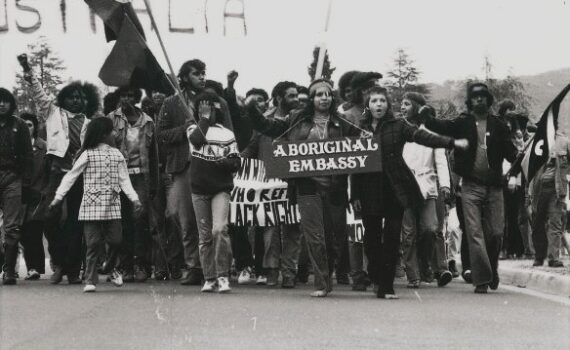
Self-Determination and Sovereignty A Call for Proposals from the Radical History Review Issue number 156 (October 2026) Abstract Deadline: November 30, 2024 Co-Edited by Marc Goulding and Bonny Ibhawoh In 2020, the United States Supreme Court issued a ruling in McGirt v. Oklahoma that significantly altered the scope of the state’s legal authority. This decision reinforced the status of the Muscogee Creek Nation in eastern Oklahoma and limited the state’s police powers. Many understood McGirt as a victory for indigenous self-governance. Seldom-questioned realms of state authority, such as legal jurisdiction and control of revenue, now came into question. A visitor to Oklahoma […]

CLICK HERE for the table of contents and links to full text. This issue of Radical History Review assembles writings from scholars, sex workers, and activists, each of whom interrogates a “troubled term” and its place in the history of prostitution. Genealogies: This section includes scholarly articles that explore a particular troubled term. Judith R. Walkowitz explores the genealogy of sex work and its embrace among UK prostitute rights activists. Elisa Camiscioli and Eva Payne trace the shifting meanings of (male) demand across national spaces, international accords, and two centuries. Christina Carney unpacks the moral panic over white slavery and […]
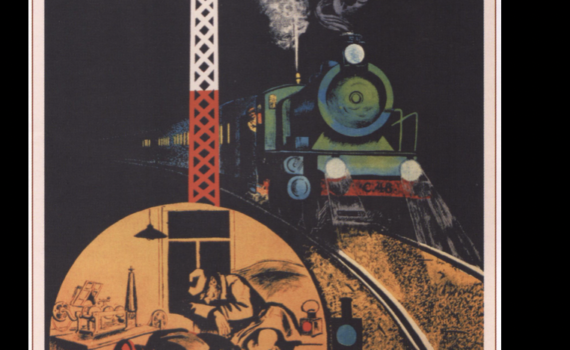
The Rest is Political: Radical Histories of Repose A Call for Proposals from the Radical History Review Issue number 154 (January 2026) Abstract Deadline: May 30, 2024 (extended deadline) Co-Edited by Amy Chazkel and Anup Grewal Radical History Review seeks contributions to a forthcoming issue that will explore the expansive possibilities when we historicize rest. Rest is everywhere part of quotidian human experience, and the human body’s need for intermittent periods of restorative unconsciousness is a universal feature of our shared biology. Yet how societies, communities and individuals have segmented sleep in time, sequestered it in space and fought over access […]
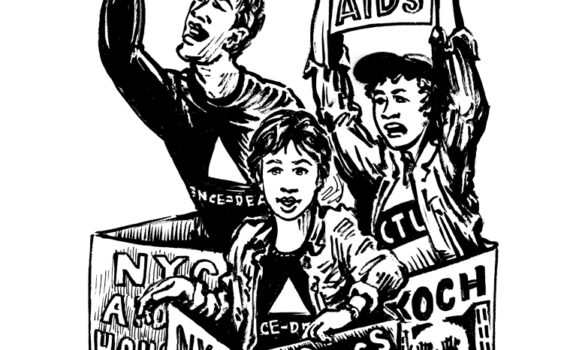
A Call for Proposals from the Radical History Review Issue number 155 (May 2026) Abstract Deadline: July 15, 2024 Co-Edited by Andor Skotnes and Paul Buhle This RHR issue will explore the recent history of comics in North America and globally—defined broadly as works that combine sequences of visual images, frequently with text, to convey narratives. Comics in this sense have existed for well over a century as independent publications as well as appearing in circulars, newspapers, magazines, pamphlets and other print (and more recently digital) media. During the 1930s, popular audiences for comics grew rapidly, especially among youth, and then grew […]

CLICK HERE for the table of contents and links to full text. This issue of Radical History Review explores how feminists have conceptualized, negotiated, and challenged structures of state violence to create sites of liberation and care within harmful and neglectful institutions. Features Emily Hobson and Mónica Jiménez demonstrate that radical care is possible from within carceral confinement. Kaysha Corinealdi, Romina Green Rioja, and Spencer Beswick document dual-pronged activisms that build alternatives to the state. Erica Edwards and Randi Gill-Sadler and Heather Berg analyze the historical and cultural resources feminists have mobilized to foster community defense. Interventions India Thusi documents […]