
After the Economic Miracle Issue number 151 (January 2025) Abstract Deadline: May 1, 2023 Co-Edited by Ravinder Kaur and Barbara Weinstein To witness the world through the many unfolding “economic miracles” is to behold dreamworlds and catastrophes all at once. Initially tied to the post-war phenomenon of wirtschaftswunder – the dramatic pace of economic recovery in West Germany – the seductive idea of “economic miracle” captured the imagination of policymakers especially across the old third world. From the “miracle on the Han river” in South Korea, the “East Asian miracle,” the South East Asian “tiger economies” to the “Chilean miracle” […]
Uncategorized
23 posts

Revolutionary Papers: Counter-Institutions, -Politics and -Cultures of Anticolonial Periodicals in the Global South Issue number 150 (October 2024) Abstract Deadline: August 15, 2022 Co-Edited by Mahvish Ahmad, Chana Morgenstern, Koni Benson, and Alex Lichtenstein Radical History Review seeks contribution for a special issue entitled Revolutionary Papers. This issue will examine periodicals and other print ephemera—including newspapers, cultural and literary journals, magazines, and pamphlets—as sites of Left, anti-imperial, and anti-colonial critical production across the Global South. During struggles against colonialism, Apartheid, and postcolonial violence, revolutionary papers generated oppositional networks, critical politics, left mobilizations, literary scenes, and alternative artistic practices. Often produced […]
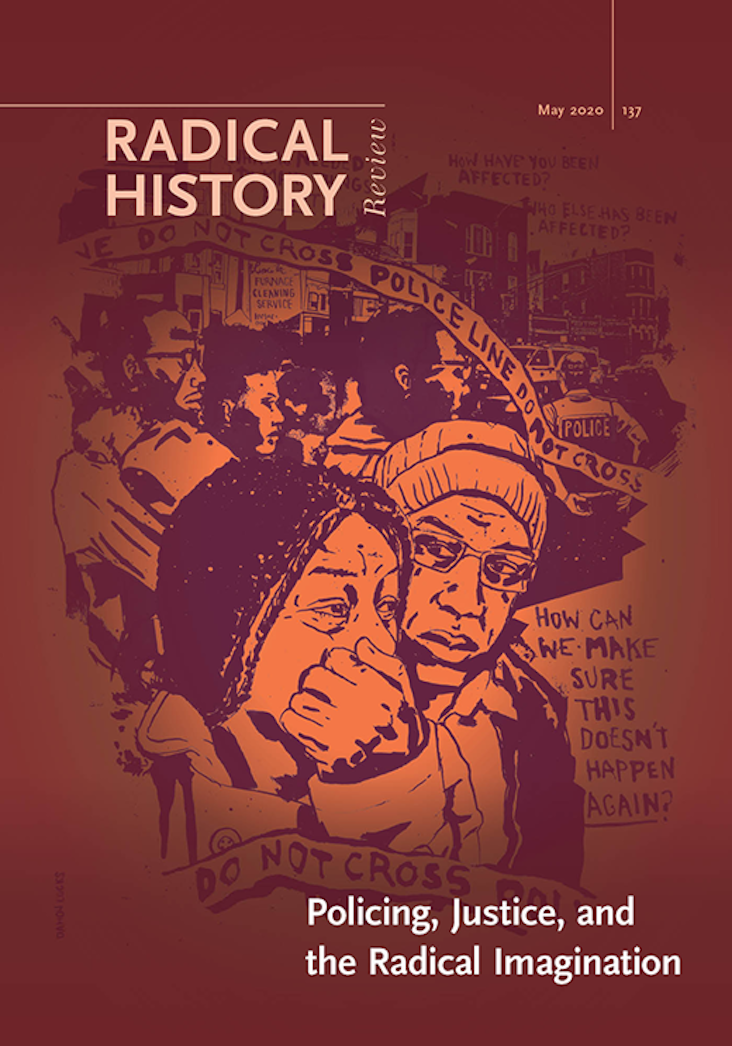
CLICK HERE for the table of contents and links to full text. This issue collects scholarship and activist work that challenges the assumption that police are necessary by examining instances of social peace without formal, institutionalized police. Features Tom Lambert reconstructs how local communities in tenth-century England carried out legal interdictions while tempering violent retributive justice. Luke A. Fidler considers how public sculpture imposed order by displaying scenes of punitive captivity in the medieval Anglo-Saxon world. Gagan Preet Singh examines why victims of cattle-theft in colonial north India avoided the police, relying instead on communal justice. Alex Winder investigates the […]

CLICK HERE for the table of contents and links to full text. This issue of Radical History Review reflects on the legacy of the Cuban Revolution as it reaches its sixtieth anniversary. Exploring the transnational meanings of the revolution through the lens of sexuality and gender, these essays offer fresh insight into Cuba’s global impact on politics and culture during the Cold War and beyond. Internationalism and Solidarity Sarah J. Seidman explores Angela Davis’s encounters with the Cuban Revolution. Lorraine Bayard de Volo analyzes the race and gender politics of Cuba’s mission in Angola. Emily Snyder traces ideas of love […]

CLICK HERE for the table of contents and links to full text. This issue examines histories of opposition connected through the concept of sanctuary, including migrant struggles against militarized borders, indigenous practices of radical hospitality, GLBTQ spaces of refuge, policing-reform efforts, and practices of civil disobedience. Sanctuary’s Radical Networks The editors introduce the issue by examining the genealogies of sanctuary as a space- and movement-based oppositional practice, one that contests the sovereign power of the nation-state and the structural roots of intersecting oppressions. Essays Rachel Ida Buff examines the original distinction made between migrants and refugees and the ways US […]

CLICK HERE for the table of contents and links to full text. This issue explores the ways, means, and co-constitution of military infrastructures, labor, strategies of violence, and capital’s emergence and ever-expanding need for growth. Violent Entanglements: Militarism and Capitalism The editors introduce the issue by examining the grassroots struggles against U.S. military expansion in Pyeongtaek, South Korea. Javier Puente unpacks military rhetoric in Peru as the military and rural indios struggle for land and labor autonomy. Feature Articles Jeong Min Kim reconstructs black-market, transactional sex during the Korean War. Patrick Chung uses the Hanjin Corporation’s rise in wartime to historicize military outsourcing […]

CLICK HERE for the table of contents and links to full text. This issue of Radical History Review explores the Global South and its meanings for reframing transnational histories between Africa, Asia, and Latin America and the Caribbean, as well as its potential for new forms of radical praxis beyond the Euro-American political order. Features Michelle Moyd resituates the First World War as a key event in the emergence of the Global South, while Quito Swan and Maurice M. Labelle, Jr. trace lesser-known political itineraries between the Middle East, Africa, and the Black Pacific. Emily Callaci examines the gendered dimensions […]

Click here for the table of contents and links to full text. This issue of Radical History Review explores tourism as a critical way of producing knowledge about the “other” and interrogates underlying systems of power that shape that knowledge production. Subaltern Sightseeing Julio Capó Jr. and Katrina Phillips address the ways subaltern groups have engaged with tourism as both the sightseers and the sightseen. Diplomacy on Display Mark Rice, Scott Laderman, and Rustem Ertug Altinay analyze the connections between foreign diplomacy and tourism in the twentieth century, using case studies of American relations with Peru, the Philippines, and Turkey. […]
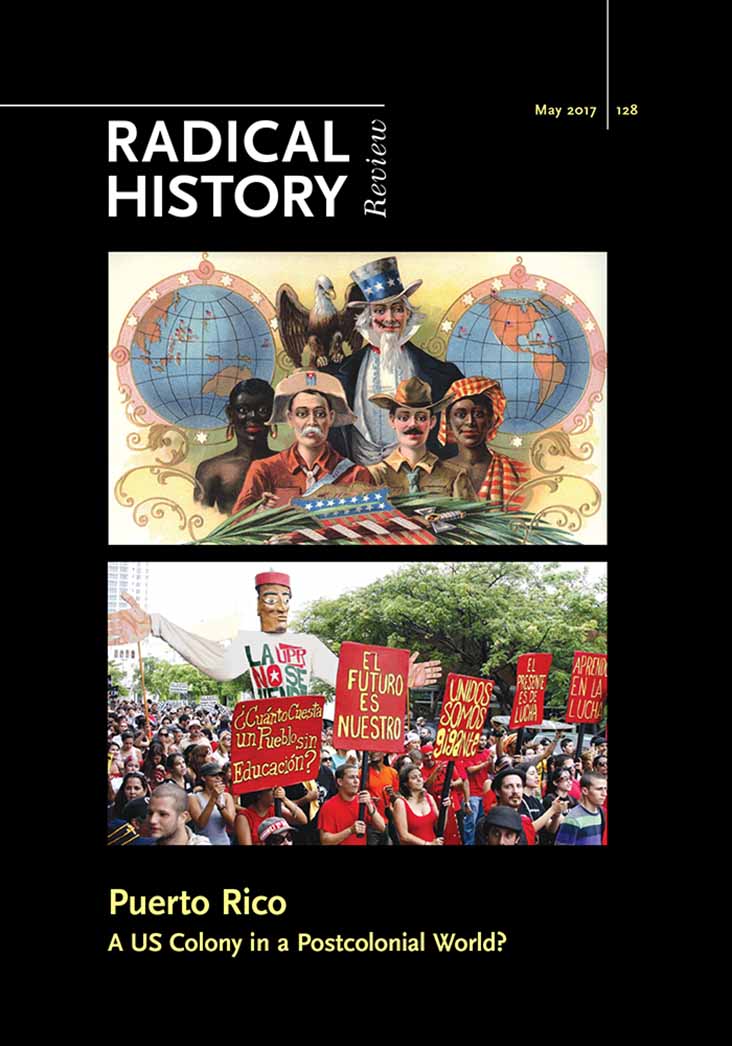
Click here for the table of contents and links to full text. This issue of Radical History Review is based on the premise that Puerto Rican history is critically important to U.S., Latin American, and world history, and is at its core a multifaceted story of colonialist oppression and people’s resistance. (Re)Views: Five-Book Overviews of Puerto Rican History Two leading historians comment on five books that introduce important aspects of Puerto Rican history. Solsiree del Moral offers a reading list on Modern Puerto Rico, particularly valuable for non-specialists. Fernando Picó discusses five books that suggest a dissenting overview that Puerto […]
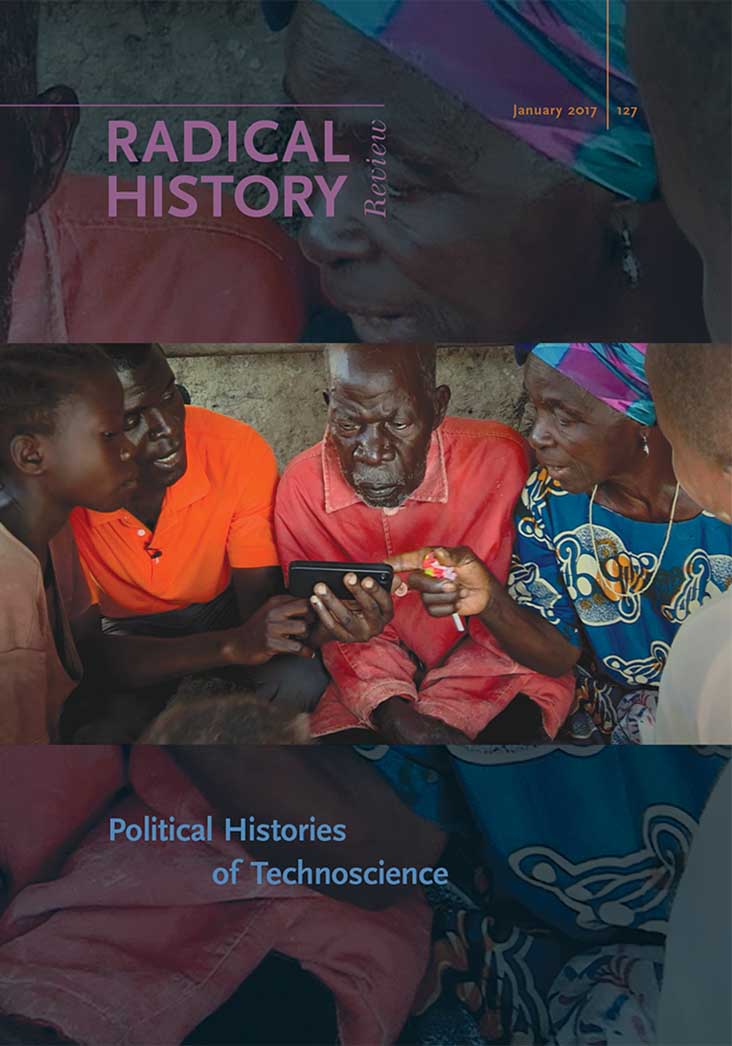
Click here for the table of contents and links to full text. This special issue of Radical History Review offers case studies of technoscience engaged both with the interdisciplinary tools of science and technology studies (STS) as well as the enduring legacies of radical political critique. Technoscience, Modernity, and the State Jonathan Hill, Jr. examines the creation of the largest electrical grid in northern Mexico in order to trace the relationship between material infrastructures of power and state formation. David Roth Singerman examines how standards for making “pure” sugar rendered invisible the labors of both plantation workers and commercial chemists […]
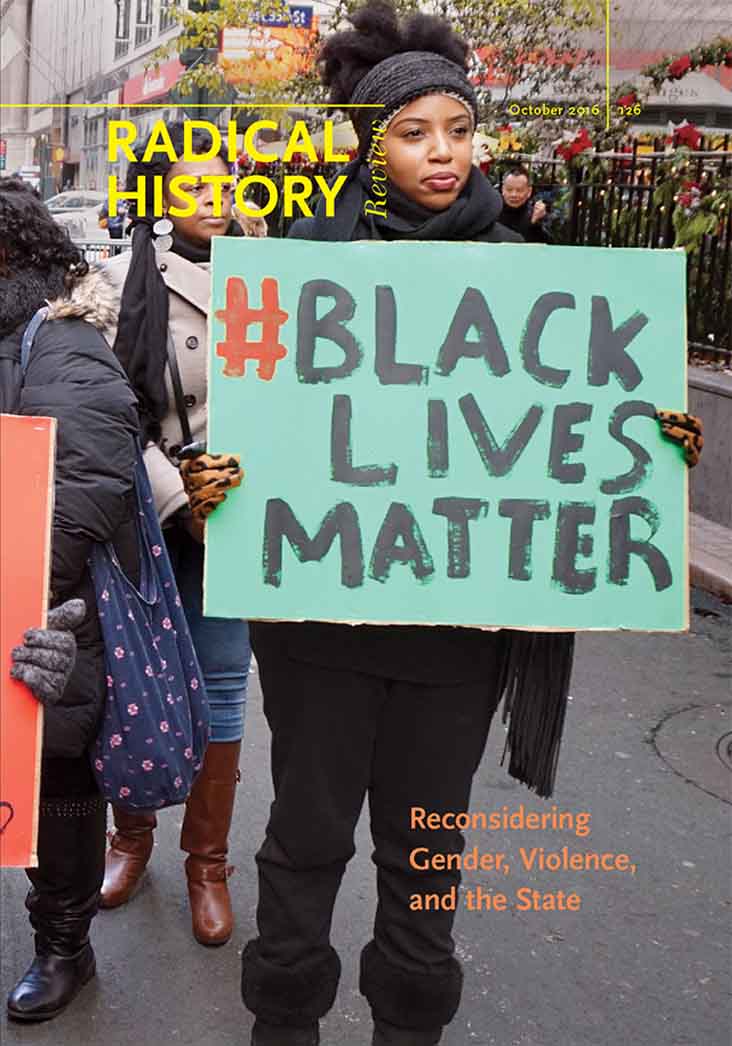
Click here for the table of contents and links to full text. Reconsidering Gender, Violence and the State Reassessing conflicting narratives of victimization, subjection, retaliation and self-defense, this issue of Radical History Review reconsiders the inter-relationships among gender, violence and the state. Features Jen Manion analyzes incidents of violence against female prisoners in penitentiaries in early nineteenth-century New York State. Tomoko Seto explores press coverage of anarchist women during the “Red Flag” incident of 1908 in late Meiji Japan. Josh Cerretti examines the ways that invocations of threats to women and children informed the US government’s rationales for military intervention abroad and […]